- 9 Tema - Mpakadan Railwayline Shai Hills Accra Ghana
- info@foodforallafrica.com
- +233 206 114 958

What We Do
Biodigital Ghana Agricultural Food Loss Recovery Program (GAFLRP)
Sustainable Climate-Smart Food Waste Management and Black Soldier Fly Biotechnology System
A flagship circular economy and climate-smart agriculture initiative by Food for All Africa, designed to drastically reduce post-harvest losses, transform organic waste into value, and build a regenerative food system powered by digital technology and Black Soldier Fly biotechnology.
Program Overview
GAFLRP
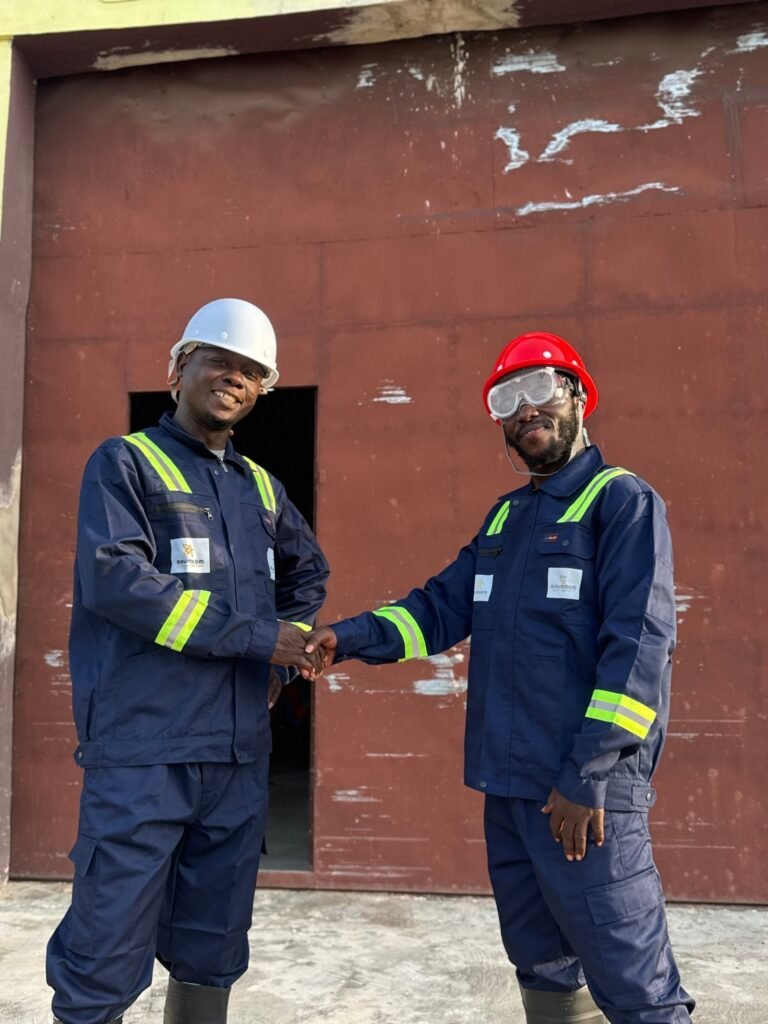
The program is implemented in strategic partnership with the Global FoodBanking Network, the Rockefeller Foundation, Okumkom BioDigital BSF Farms, BioDigital Tech Solutions UK, Kumasi Institute of Tropical Agriculture, Food for All Africa UK, the Australian Centre for International Agricultural Research, and other global and local partners committed to sustainable food systems transformation.

2022 – 2025
Key Achievements
Recovered over 185,000 kg of fresh, edible food from the agricultural supply chain.
Increased direct agricultural food sourcing from less than 1% to 64% of total food bank supply.
Developed a national database of agricultural partners and food recovery points.
Trained and supported 285 smallholder farmers across three regions.
Engaged with over 20,000 tons of agricultural food products, revealing large-scale systemic post-harvest losses.
Identified that less than 20% of surplus agricultural food is currently recovered, with the majority becoming organic waste contributing to methane emissions.
These findings underscored the urgent need for a scalable waste-to-value solution integrated into food banking systems.
Food For All Africa
The Transition to BioDigital Circular Innovation
Based on these insights, Food for All Africa initiated a feasibility study to convert its satellite warehouse in Offinso Municipality (Ashanti Region) into a smart, digitally enabled Black Soldier Fly biotechnology hub.
This transition marks the evolution of GAFLRP from a food recovery initiative into a fully integrated Food–Feed–Fertilizer Circular Economy System.
Food For All Africa
The Okumkom BioDigital Black Soldier Fly Farm
The Okumkom BioDigital Black Soldier Fly Farm is a community-led circular innovation project by Food for All Africa in partnership with:
AgriConnect Ghana
Offinso Municipal Assembly
Kumasi Institute of Tropical Agriculture
BioDigital Tech Solutions UK
Local smallholder farmer associations and youth groups
The project integrates digital technology and BSF biotechnology to convert organic waste into:
High-quality insect protein meal for animal feed
Nutrient-rich organic fertilizer for sustainable agriculture
A digital mobile application supports waste tracking, farmer engagement, incentives, and real-time monitoring of the circular value chain.

Discount Food App
Project Targets and Outputs
Production of 5000 tonnes of BSF protein meal per year
Diversion of 50000 tonnes of organic waste annually from landfill
Production of 2000 tonnes of organic fertilizer per year
Creation of 35 direct jobs and 56 indirect jobs
Strengthening of food security and circular agriculture systems in Ashanti Region and beyond
Project Justification
Ghana generates approximately 12,710 tons of municipal solid waste daily, with 60–65% being organic waste. In parallel:
Over 320,000 tons of edible food is wasted annually
Economic losses from food waste exceed $700 million USD annually
More than 6 million people remain at risk of hunger
At the same time, farmers face:
High costs of animal feed and fertilizers
Limited access to sustainable agricultural inputs
Declining soil fertility and productivity
The Ashanti Region, a key agricultural and food production hub, generates approximately 20.1% of Ghana’s municipal waste, making Offinso Municipality a strategic location for circular transformation.
Key Program Activities
Food Redistribution Integration
Redirecting edible surplus food to Food for All Africa feeding programs and vulnerable beneficiaries.
Digital Waste Recovery System
Collection and tracking of agricultural surplus and organic waste using a mobile application to monitor diversion from landfills.
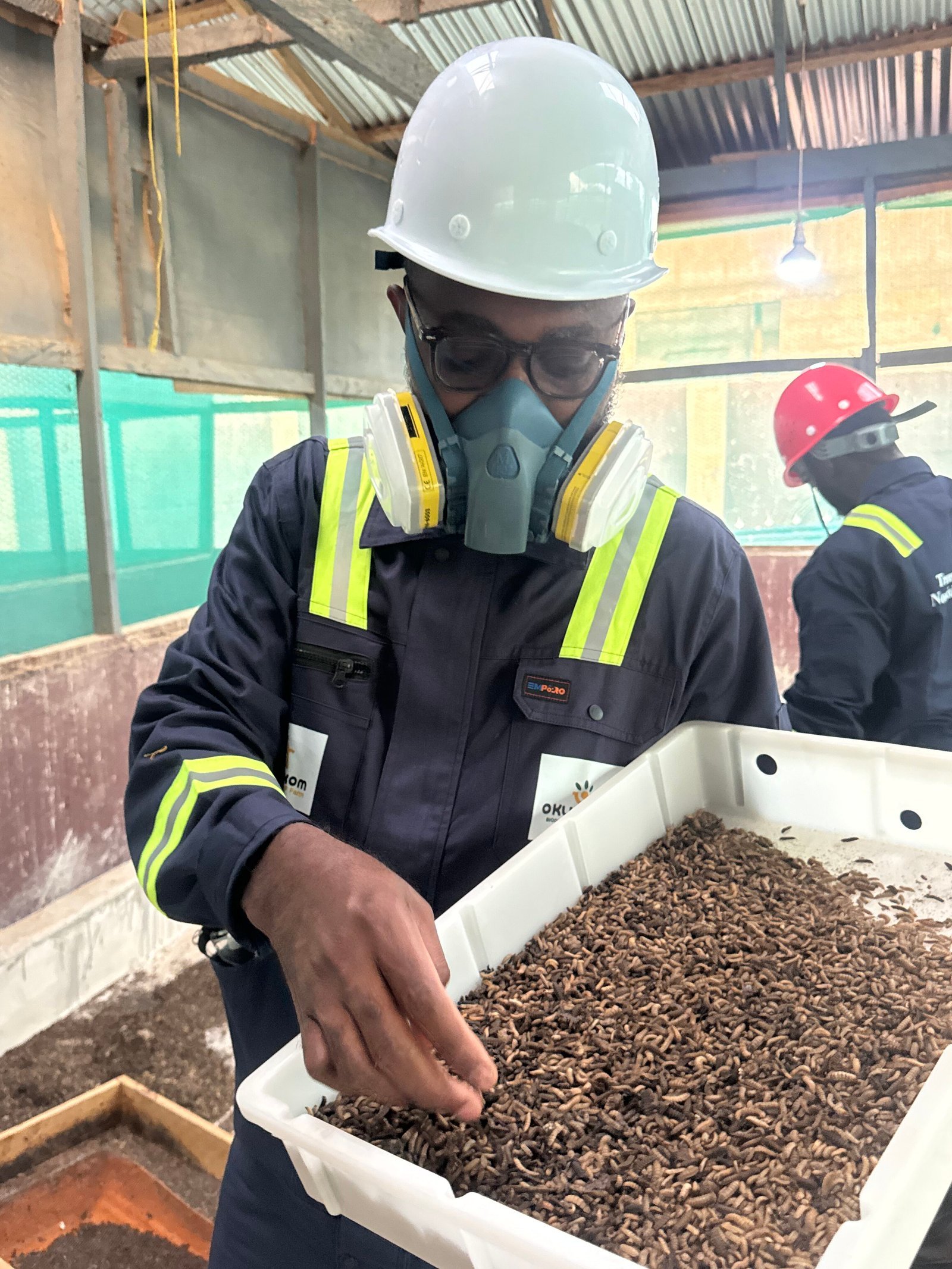
BSF Bioconversion System
3.Processing inedible organic waste into insect protein and organic fertilizer through controlled BSF production systems.
Digital Circular Economy Platform
Real-time data tracking, farmer rewards, carbon impact monitoring, and market linkage for BSF products.
Capacity Building and Training
Training women, youth, and smallholder farmers in BSF farming, organic waste management, and circular agriculture practices.
Technical Capacity and Global Learning Exchange
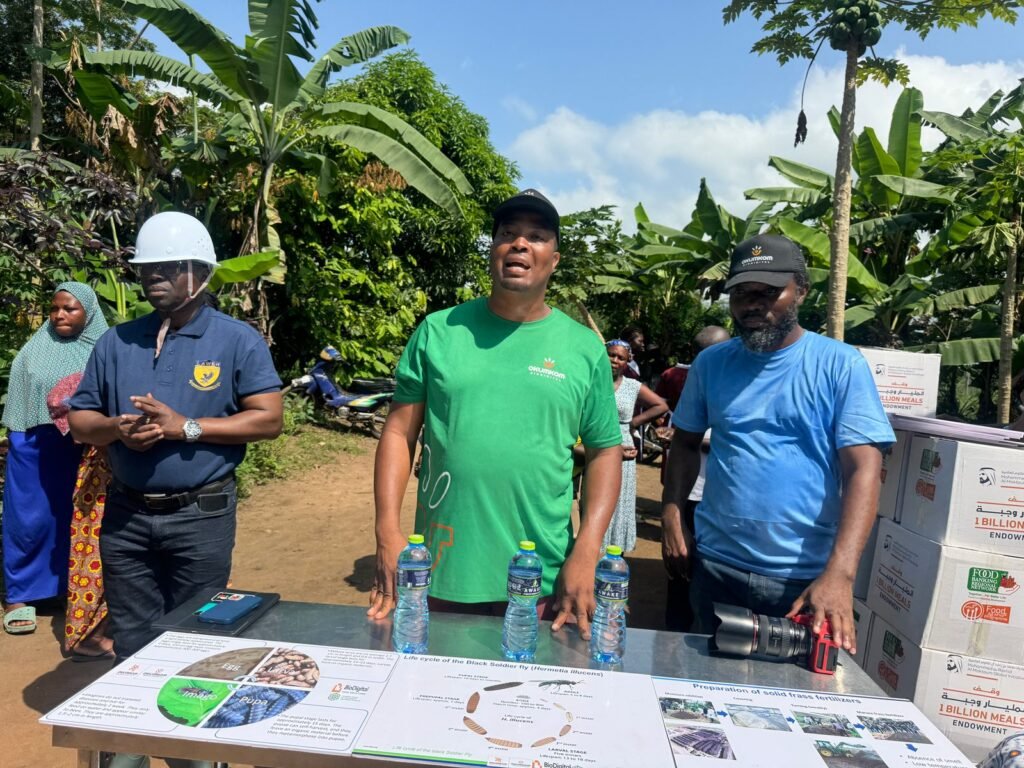
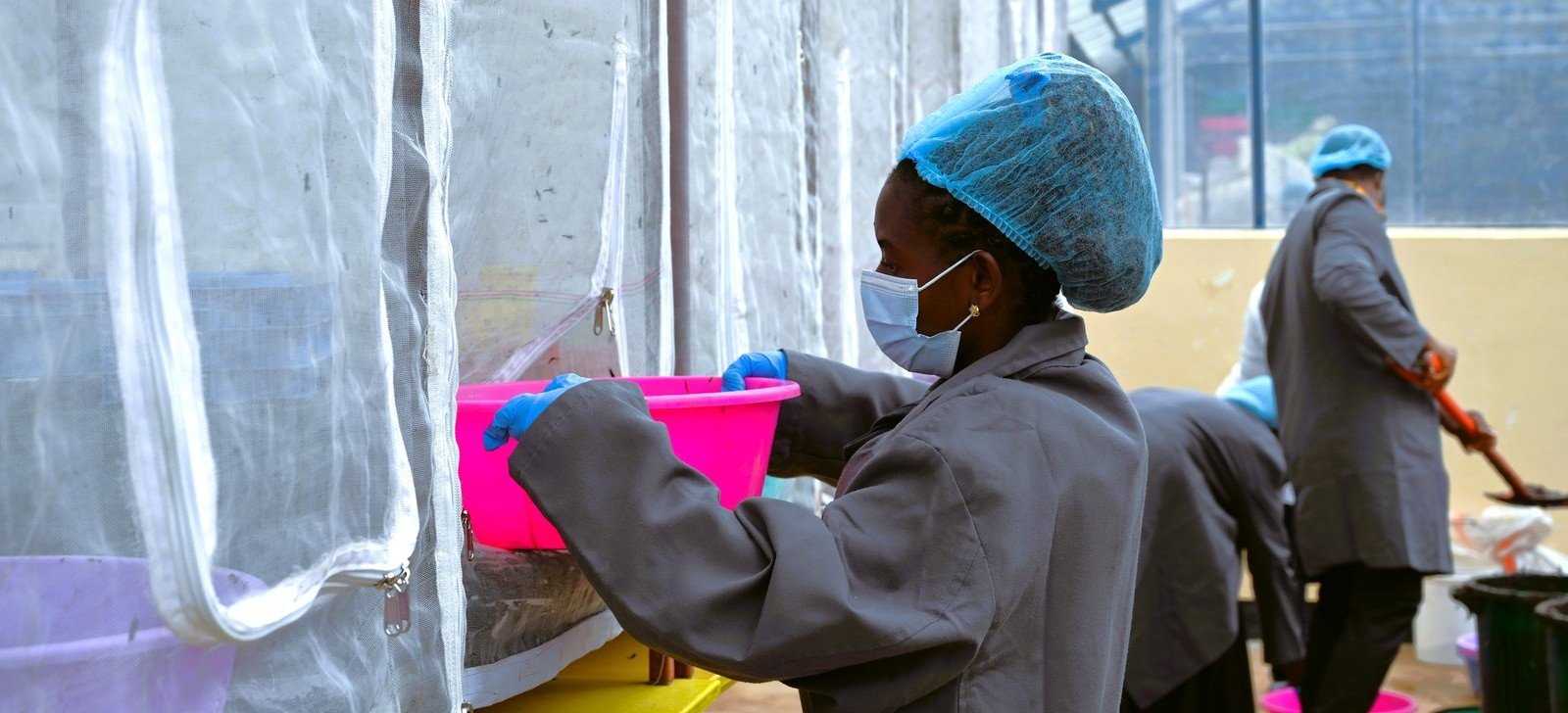
Food for All Africa has strengthened its technical capacity through international exposure and training. Six team members participated in a hands-on BSF training program in Kenya, facilitated by the Australian Centre for International Agricultural Research (ACIAR) at the International Centre of Insect Physiology and Ecology (icipe).
This experience included:
Practical BSF production and processing training
Study visits to successful BSF enterprises in Kenya
Value chain development and business model design
Regional insights into scalable insect biotechnology systems
This expertise, combined with existing food banking infrastructure and digital innovation capacity, positions Food for All Africa as a leader in integrated circular food systems in Africa.
Project Goal
The goal of the GAFLRP BioDigital BSF initiative is to develop a scalable, replicable waste-to-value system that converts agricultural food loss into high-value products while strengthening food security, improving farmer livelihoods, and reducing environmental impact.
Aligned with Food for All Africa’s 10-year vision and 2024–2029 strategic plan, the project seeks to build a national systemic response to food loss and nutritional insecurity through innovation, inclusion, and sustainability.
The project will also serve as a pilot for Ghana and Africa’s first food bank-integrated Black Soldier Fly production facility, with potential for global replication in other developing economies.
Project Design and Circular Model
Inclusive Ownership Model
Women, youth, and smallholder farmers are actively engaged through training, participation, and incentive-based reward systems linked to waste contribution.
Circular Business Model
Organic waste is collected and processed into BSF larvae and organic fertilizer. Larvae are sold as sustainable animal feed alternatives for poultry and aquaculture, while fertilizer is redistributed to farmers as incentives for participation.
Digital Efficiency System
The BioDigital platform provides real-time data on waste streams, production efficiency, carbon savings, and logistics optimization.
Market Integration Strategy
Strong partnerships with farmers, municipalities, and agribusinesses ensure stable demand for BSF products and sustainable market development.
Reinvestment Mechanism
Revenue generated from BSF products is reinvested into operations and farmer support systems, including:
- Agricultural input support (seeds and fertilizers)
- Mechanization services (tractor support)
- Extension and advisory services
- Community livelihood development programs
Strategic Impact
The GAFLRP BioDigital BSF initiative delivers impact across four key dimensions:
- Food Security:Improved availability of affordable protein and fertilizer inputs
- Climate Action:Reduced methane emissions from organic waste decomposition
- Economic Empowerment:Job creation and income generation for rural communities
- System Transformation:Integration of food banking with circular biotechnology systems
The Biodigital Ghana Agricultural Food Loss Recovery Program represents a transformative shift from traditional food recovery to a fully integrated circular food–feed–fertilizer ecosystem powered by data, innovation, and biotechnology. By linking food banking with Black Soldier Fly innovation and digital systems, Food for All Africa is pioneering a new model for sustainable agriculture, climate resilience, and food system transformation in Ghana and beyond.
Join Food for All Africa in building a more food-secure future.